
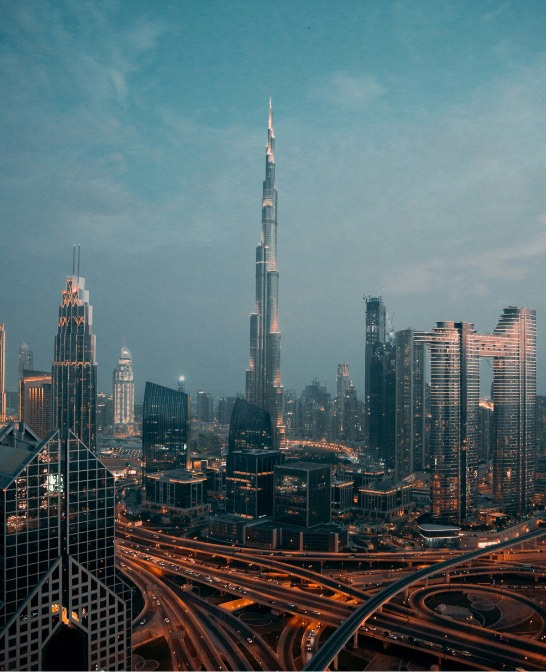
Dubai has developed into one of the world’s most closely watched property investment destinations. Its modern infrastructure, international business environment, expanding population and diverse selection of residential communities continue to attract local and international buyers. For investors, understanding the Dubai property appreciation rate is essential when evaluating the long-term potential of apartments, villas, townhouses and off-plan developments.
Property appreciation refers to the increase in a property’s market value over time. However, there is no single appreciation percentage that applies to every property in Dubai. Growth depends on the location, property type, developer, purchase price, infrastructure, market timing and level of demand within a particular community.
Recent market indices also demonstrate why investors should evaluate appreciation carefully. Knight Frank reported that average Dubai residential values were 10% higher year-on-year in the third quarter of 2025. ValuStrat’s index indicated annual growth of 17.4% in February 2026, while REIDIN data showed annual residential price growth of 6.09% in April 2026. These differences reflect varying methodologies, property samples and reporting periods.
Understanding Current Dubai Property Price Appreciation
The Dubai market experienced several years of strong residential value growth from late 2020 onwards. Knight Frank reported that average values had risen for 20 consecutive quarters by the third quarter of 2025. At that point, average residential values were approximately 75% higher than in 2020, while villa values had increased more significantly than apartment values.
The market entered 2026 with continued transaction activity, although price growth began to vary more noticeably between different segments. Dubai Land Department data showed that total real estate transactions reached AED 252 billion in the first quarter of 2026. This represented a 31% year-on-year increase in value and a 6% increase in transaction volume.
At the same time, more recent price indices suggest that the market is transitioning from rapid, broad-based appreciation towards more selective growth. REIDIN data for April 2026 indicated that residential prices remained 6.09% higher year-on-year but declined by 1.76% compared with the previous month. Apartments recorded annual growth of 5.49%, while villas increased by 9.86%.
This demonstrates an important point for investors: the overall Dubai property appreciation rate should not be treated as a guaranteed return. Strong transaction activity can continue while individual areas, buildings or property types perform differently.
Factors Driving the Dubai Property Appreciation Rate
Population and Housing Demand
Population growth creates demand for both rental and owner-occupied properties. As new professionals, entrepreneurs and families relocate to Dubai, demand expands across various segments, from affordable apartments to luxury villas.
Communities offering schools, healthcare facilities, retail centres, green spaces and reliable transport connections may benefit from stronger end-user demand. This is important because end users typically support more sustainable appreciation than short-term speculative activity.
Infrastructure Development
New roads, public transport connections, airports, business districts and lifestyle destinations can improve the accessibility and desirability of a location. Property values may appreciate as infrastructure progresses and the surrounding community becomes more established.
Investors should distinguish between confirmed infrastructure and speculative announcements. Projects with clearly defined timelines and visible construction progress generally provide a more dependable basis for evaluating future value.
Foreign Investment
Dubai’s freehold property market allows eligible international buyers to own properties in designated areas. Its global connectivity and broad selection of residential products make the city accessible to investors from numerous markets.
International investment can support liquidity, particularly in communities with global recognition. However, properties dependent entirely on investor demand may be more sensitive to changes in market sentiment than communities supported by both investors and permanent residents.
Developer Reputation
A developer’s track record can influence Dubai property price appreciation, particularly in the off-plan segment. Projects from developers known for construction quality, timely delivery, community management and attractive amenities may generate stronger buyer confidence.
The developer’s reputation can also affect resale demand before and after handover. Buyers should examine completed projects, delivery history, service charges and maintenance standards rather than relying exclusively on launch marketing.
Supply and Demand
Limited supply can support appreciation, especially in established waterfront, beachfront and villa communities. By contrast, locations with a large pipeline of similar units may experience greater competition between sellers and landlords.
Supply analysis should include completed properties, units under construction and future project launches. A community may currently appear undersupplied while having thousands of similar units scheduled for completion over the following years.
Dubai Property Appreciation Rate by Property Type
Apartments
Apartment appreciation varies substantially by community, building quality and unit configuration. Apartments in central business districts, waterfront destinations and established lifestyle communities often benefit from strong tenant and buyer demand.
Smaller apartments may offer a lower investment entry point and a wider resale audience. Larger luxury apartments may experience stronger absolute capital gains but can have a smaller buyer pool. Building maintenance, service charges, views and property management are particularly important when assessing apartment appreciation.
Villas
Villas have achieved notable capital growth during recent market cycles. Limited availability, demand for larger homes and the expansion of family-oriented communities have supported villa values.
Recent REIDIN figures illustrate this difference, with villa prices rising 9.86% annually in April 2026 compared with 5.49% for apartments. However, performance varies significantly by community, plot position, property age and renovation quality.
Older villas may require substantial renovation expenditure, while newer properties can command premiums for contemporary layouts and energy-efficient features. Buyers should therefore calculate the total cost of ownership before estimating potential returns.
Townhouses
Townhouses occupy an important position between apartments and independent villas. They are often popular with families seeking additional space, private outdoor areas and community amenities without the higher acquisition cost of a large villa.
Well-planned townhouse communities may benefit from strong end-user demand, particularly when they include schools, parks, retail facilities and convenient transport connections. Appreciation can be affected by the number of identical units available and the frequency of new project launches in nearby areas.
Luxury and Branded Residences
Luxury properties can achieve strong capital growth when they combine a limited location, exceptional design, recognised branding and high-quality management. Palm Jumeirah, Downtown Dubai and selected waterfront destinations have attracted significant international demand.
However, luxury performance is highly property-specific. A rare beachfront villa and a mass-produced luxury apartment may not experience the same appreciation even when both are marketed within the premium segment.
Investors should assess scarcity, privacy, view protection, service quality and the depth of the future resale market.
Best Areas for Dubai Property Price Appreciation
Downtown Dubai
Downtown Dubai remains one of the city’s most recognisable residential and tourism destinations. Its proximity to Burj Khalifa, Dubai Mall, hotels, offices and entertainment venues supports both local and international demand.
Properties with unobstructed views, efficient layouts and reputable building management may command a premium. Investors should compare service charges and building age because these factors can influence future resale performance.
Palm Jumeirah
Palm Jumeirah is associated with luxury apartments, beachfront villas, hotels and branded residences. Its limited geography creates a level of scarcity that cannot easily be replicated elsewhere.
Renovated villas, premium apartments and properties with protected sea views may experience stronger demand. Nevertheless, purchase price, renovation cost and ongoing maintenance must be evaluated carefully.
Dubai Marina
Dubai Marina offers waterfront living, established transport connections, retail facilities and a broad selection of apartments. Its mature infrastructure and international profile support rental and resale activity.
Building quality varies considerably across the community. Investors should assess maintenance, congestion, views, unit efficiency and service charges before making comparisons.
Dubai Hills Estate
Dubai Hills Estate combines apartments, townhouses and villas within a master-planned environment. Its golf course, green spaces, schools, healthcare facilities and retail destinations contribute to its appeal among families.
As different sections of the community mature, appreciation may be influenced by infrastructure completion, landscaping quality and the availability of comparable properties.
Business Bay
Business Bay benefits from its proximity to Downtown Dubai and its mix of residential, commercial and hospitality developments. Canal-facing projects and high-quality new buildings may attract professionals and international investors.
The number of developments in the area makes individual building selection essential. Strong appreciation is more likely where construction quality, layouts, views and management standards differentiate a property from competing supply.
Dubai Creek Harbour
Dubai Creek Harbour is an emerging waterfront destination with modern residential towers, public spaces and long-term development potential. Early investors may benefit as infrastructure, retail offerings and community facilities expand.
As with any developing location, appreciation depends on delivery progress, future supply and the ability of the completed community to attract permanent residents.
Jumeirah Village Circle
Jumeirah Village Circle attracts investors seeking relatively accessible entry prices and broad rental demand. The area includes apartments, townhouses and villas from numerous developers.
Performance can vary between buildings because of differences in quality, location, amenities and handover timing. Careful project selection is therefore more important than relying on the community name alone.
Dubai South
Dubai South is associated with Expo City Dubai, logistics activity and the long-term expansion of Al Maktoum International Airport. Its comparatively accessible property prices may offer capital-growth potential as infrastructure and employment opportunities develop.
The investment horizon is important in emerging areas. Buyers should be prepared to hold properties through the community’s development period rather than expecting immediate appreciation.
Capital Appreciation Versus Rental Yield
Capital appreciation and rental yield represent different components of property investment performance. Capital appreciation measures the increase in the property’s value, while rental yield measures the annual income generated relative to the property’s cost.
A property with a high rental yield may not necessarily achieve the strongest capital growth. Similarly, a premium property with significant appreciation may produce a comparatively modest rental yield.
Investors should evaluate total return rather than focusing on only one measurement. Total return may include rental income, capital growth and additional costs such as service charges, maintenance, financing, vacancy periods and transaction fees.
A balanced investment strategy may prioritise communities offering both sustainable tenant demand and credible long-term appreciation.
Risks That Can Affect Dubai Real Estate Capital Growth
Property values can be influenced by market corrections, economic conditions, interest rates, financing availability, geopolitical developments and changes in buyer confidence. A substantial increase in new supply can also place pressure on resale prices in communities where many similar properties become available simultaneously.
Property-specific risks include construction delays, poor maintenance, high service charges, inefficient layouts, obstructed future views and weak building management.
Investors should avoid assuming that every Dubai property will appreciate at the same rate. Due diligence should include transaction analysis, rental evidence, developer assessment, supply forecasts and a realistic holding period.
How Legacy Elite Real Estate Supports Property Investors
Selecting a property with capital-growth potential requires more than identifying a popular location. Buyers need to examine transaction history, developer quality, community maturity, property supply, rental demand and future infrastructure.
Legacy Elite Real Estate helps investors compare suitable properties according to their budgets, investment horizons and expected returns. This approach allows buyers to evaluate opportunities using market evidence instead of relying only on promotional projections.
Whether an investor is considering a ready apartment, an off-plan residence, a family townhouse or a luxury villa, Legacy Elite Real Estate provides guidance throughout the property search and acquisition process.
Conclusion
The Dubai property appreciation rate can provide valuable insight into the performance of the residential market, but it should never be viewed as one fixed percentage. Appreciation varies according to the location, property type, developer, purchase price, supply pipeline and wider market conditions.
Recent reports have shown positive annual price growth alongside signs of monthly moderation. This indicates that Dubai is moving towards a more selective phase in which property quality and location may become increasingly important.