
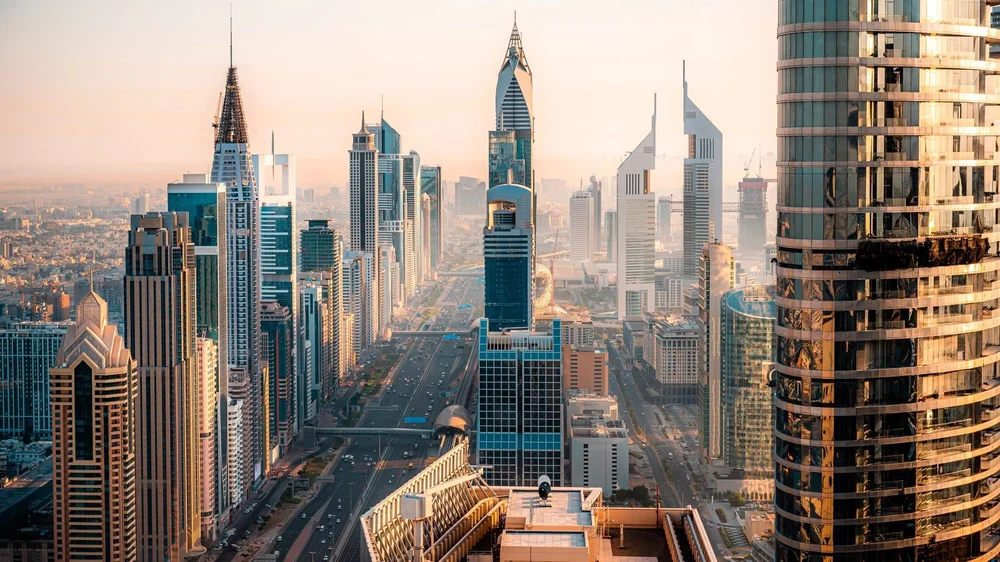
Few questions divide global investors quite like this one. Ask it in a Mayfair boardroom and you'll get caution; ask it in a Dubai brokerage and you'll get a spreadsheet. The truth sits between the two. So, is Dubai real estate a good investment? The honest, evidence-based answer is yes — for the right buyer, in the right community, with the right time horizon. Dubai has matured from a speculative frontier into a transparent, regulated, yield-driven asset class, and the fundamentals heading deeper into 2026 are some of the strongest in the world. But "good" is conditional, and understanding those conditions is what separates investors who compound wealth here from those who chase the wrong headline.
This guide breaks down the real numbers, the structural advantages, and the genuine risks — so you can decide with clarity rather than hype.
Why Investors Keep Choosing Dubai
The Dubai real estate investment benefits start with a fiscal architecture few global cities can match. There is no annual property tax, no capital gains tax on a sale, and no personal income tax on rental earnings. For an investor, that means the income your asset generates stays almost entirely yours to reinvest or distribute — a structural edge over London, New York, or Singapore, where transaction taxes and holding costs quietly erode returns.
Behind the tax story sits stability. The UAE Dirham is pegged to the US Dollar at a fixed 3.6725, which shields property revenues and capital values from the currency swings common in emerging markets. Layered on top is a strong regulatory framework: the Dubai Land Department (DLD) provides clear title registration and transparent pricing, while the Real Estate Regulatory Agency (RERA) mandates that funds for off-plan purchases sit in independent, government-approved escrow accounts. This consumer-protection layer is precisely what reassures cautious capital.
The demand engine is equally compelling. Dubai's population has climbed past 3.7 million and continues to grow at roughly 3–4% a year, driven by corporate relocations, entrepreneurs, and high-net-worth families. More residents mean more housing demand — the most durable foundation any property market can have.
Rental Yield Trends in Dubai Properties
For income-focused buyers, rental yield trends in Dubai properties are the headline attraction. As of April 2026, the city's average gross rental yield stood at around 6.68%, with apartments averaging 7.15% — comfortably ahead of mature global hubs where net yields often sit below 3%. Net yields in Dubai typically land between 5% and 8% once service charges and maintenance are deducted.
Where you buy matters enormously, and the market broadly splits into two camps: high-yield mid-market communities built for cash flow, and prime established districts built for prestige and stability.
High-yield, mid-market and emerging communities
- International City — Delivers the highest recorded gross yields in 2026 at around 8.9%, supported by the lowest entry prices in the city. It's a natural starting point for first-time investors prioritizing raw rental return over lifestyle prestige.
- Dubai Silicon Oasis (DSO) — Yields of roughly 8–9% are driven by steady demand from tech professionals and proximity to Academic City. Low entry prices make the percentages attractive, though tenant demand here is more price-sensitive than in prime areas.
- Al Furjan — Studios commonly reach around 8.5%, helped by an outdoor-friendly, family-leaning community feel and ongoing infrastructure upgrades. It appeals to investors wanting strong yield without the volatility of the cheapest stock.
- Jumeirah Village Circle (JVC) — Yields sit in the 7.4–8.8% range, with the highest residential sales volume in Dubai and an unusually deep, diverse tenant base. That breadth of demand cushions it against cyclical swings, making it a reliable income play.
Prime, established and capital-growth communities
- Business Bay — Central location and modern high-rises deliver yields of roughly 6–8% alongside strong resale liquidity. It offers a balanced blend of dependable income and long-term value for investors who want both.
- Dubai Marina — Yields range from about 3.9% to 6.5% depending on unit size, with studios performing best. The premium waterfront lifestyle and unmatched expat demand make it a liquidity-first asset rather than a pure yield play.
- Downtown Dubai — Gross yields hover around 6.2%, but net returns compress once high purchase prices and service charges are factored in. This is a prestige and capital-preservation hold, prized for its global brand value and resale strength.
- Dubai Hills Estate — Apartment yields sit near 6%, paired with steady capital appreciation in a master-planned, family-focused setting. Green spaces, schools, and a golf course make it a long-horizon community for stability over headline income.
The pattern is clear: prime waterfront assets like Palm Jumeirah and Downtown deliver prestige, liquidity, and capital preservation, while communities such as JVC, Arjan, Dubai South, and Dubai Silicon Oasis deliver the strongest cash flow. The savviest investors blend both — income-generating units in mid-market districts alongside appreciating assets in prime locations.
A word of discipline: always underwrite net yield, not the advertised gross figure. Service charges vary widely — from roughly AED 10–16 per square foot in low-rise JVC buildings to AED 25–40 in premium towers — and district cooling costs can quietly shave points off your return.
ROI on the Dubai Property Market
Understanding ROI on Dubai property market means looking beyond rent to total return — rental income plus capital appreciation, minus costs. The 2026 market has shifted from the double-digit price surges of 2023–2024 into a more sustainable, structured growth phase. Annual appreciation in many established areas has stabilized into the low single digits, while select emerging districts continue to record stronger gains as infrastructure catches up to demand.
Budget realistically for entry costs. Beyond the purchase price, expect a 4% DLD transfer fee, roughly 2% in agency commission, a registration trustee fee of around AED 4,200, and — if financing — mortgage arrangement fees of 1–2%. These costs are modest by global standards, but they matter when you're calculating true ROI on a five-year hold. The reassurance for income investors is simple: if you buy at a 6–7% net yield, the cash flow works regardless of short-term price movements. You aren't betting purely on appreciation — you're earning steady, tax-free income while you wait.
Foreign Investment in Dubai Property
One of Dubai's defining strengths is how openly it welcomes international capital. Foreign investment in Dubai property is not just permitted — it's actively engineered for. Non-resident buyers of any nationality can purchase, lease, sell, and inherit freehold property in over 60 designated zones, including Dubai Marina, Downtown, Palm Jumeirah, Business Bay, and JVC. You don't need to be a resident, and transactions can often be completed remotely through licensed DLD trustees.
The accelerant is the Golden Visa. Investing in qualifying property worth at least AED 2 million unlocks a renewable 10-year residency, with no minimum-stay requirement and full family sponsorship. Lower thresholds exist too: a two-year property investor visa from AED 750,000, and a five-year retirement visa for those aged 55+ investing AED 1 million. Crucially, 2026 brought regulatory refinements — including relaxed rules for mortgaged and off-plan buyers pursuing residency — that many older guides haven't caught up to. The result is a buyer pool that has shifted from transient speculators to long-term "homesteaders," with the foreign-investor mix led by India (around 35%), Europe (18%), China (15%), and Pakistan (12%).
Long-Term Capital Growth in Dubai Real Estate
If yield is the present, vision is the future — and this is where long-term capital growth Dubai real estate becomes a genuinely futuristic proposition. Dubai isn't growing by accident; it's growing by design. The Dubai Economic Agenda D33 aims to double the size of the city's economy by 2033, while the Dubai 2040 Urban Master Plan is reshaping land use, green space, and residential capacity for a projected population surge.
The infrastructure pipeline underpins tomorrow's appreciation. The expansion of Al Maktoum International Airport, the continued build-out of Expo City, and the upcoming Metro Blue Line are not abstract megaprojects — they are permanent value drivers that lift connectivity, employment, and rental demand in their catchment areas. Districts like Dubai South sit directly in this growth corridor, transitioning from peripheral to primary economic engines. The UAE Central Bank's projection of 5.6% GDP growth for 2026, powered largely by the non-oil economy, signals an economy diversifying away from the volatility that once concerned global observers.
For a patient investor, this is the compelling thesis: buy into well-located, liquid communities today and ride a decade of state-backed economic expansion.
The Honest Risks
No credible analysis ignores the downside. Dubai now has more than 1.2 million residential units, and accelerated completion rates have sparked legitimate oversupply concerns in certain off-plan-heavy pockets. Some analysts have floated the possibility of a 10–15% correction as the market normalizes — though current data points to a localized price discovery, concentrated by micro-location, rather than a broad collapse. Rising global interest rates can pressure debt-financed buyers, and the market's reliance on international sentiment means it isn't immune to global shifts.
The mitigation is strategy, not avoidance: buy quality buildings in established, liquid communities; verify RERA approval and developer track record; underwrite net yield carefully; and favor genuine end-user demand over speculative momentum.
The Verdict
So, is Dubai real estate a good investment in 2026 and beyond? For the informed, disciplined buyer — yes. The combination of tax efficiency, 6–8% net yields, a dollar-pegged currency, world-class regulation, open foreign ownership, and a state-engineered growth agenda is difficult to replicate anywhere else on earth. The "easy money" era of buying anything and watching it double has passed; the rewarding era of buying well has arrived. Choose your location with data, hold for the long term, and Dubai remains one of the most strategically positioned property markets in the world.
Frequently Asked Questions
Can foreigners buy property in Dubai? Yes. Investors of any nationality can fully own freehold property in designated zones, with no residency requirement.
What is a good rental yield in Dubai? A net yield of 6–8% is achievable in mid-market communities like JVC, Dubai Silicon Oasis, and International City.
Do you pay tax on Dubai rental income? No. Dubai levies no personal income tax, no annual property tax, and no capital gains tax for individual investors.
How much do you need for the Golden Visa? AED 2 million in qualifying property secures a renewable 10-year residency; lower-threshold visas start at AED 750,000.
Conclusion
Dubai property market in 2026 rewards strategy over speculation. The structural case is genuinely rare: tax-free rental income, net yields of 5–8%, a dollar-pegged currency, transparent DLD and RERA oversight, fully open foreign ownership, and a residency pathway through the Golden Visa — all underpinned by a state-engineered growth agenda in D33 and the Dubai 2040 Urban Master Plan. Few global cities offer that combination, and fewer still are building the infrastructure — new airports, metro lines, and economic zones — to sustain it for the next decade.