
Dubai's property market started 2026 at full speed, then shifted gear. Regional conflict earlier in the year weighed on sentiment across the Gulf, and from spring onwards buyers became more selective. The result, as we move through the second half of 2026, is a market that is normalising rather than collapsing, and one where the right choice of area and project matters more than it has for years.
Here is what the latest data tells us, and how we're advising clients.
A strong first half, a slower summer
According to Dubai Land Department (DLD) data, Dubai recorded AED 286.43 billion in property sales across 79,229 transactions between January and June 2026. January alone contributed AED 72.16 billion, the strongest month of the half.
The first quarter was especially strong: DLD reported total real estate transactions of AED 252 billion in Q1, up 31% year on year, with 48,448 investors active in the market, an 8% increase.
Momentum then eased. Engel & Völkers' mid-year review puts H1 residential sales at 79,281 transactions worth AED 221.4 billion, 13.8% lower by volume and 15.7% lower by value than the record first half of 2025. The slowdown continued into the summer: betterhomes' analysis of August 2026 data shows sales volumes down 37% and values down 44% compared with August 2025.
Prices: a gentle adjustment, not a correction
Savills' Q2 2026 report describes the market as normalising. Average apartment prices eased 4% quarter on quarter to around AED 1,960 per sq ft, but were still up 1.9% year on year. Villas and townhouses were almost flat over the quarter (−0.8%) and remain 8.5% higher than a year earlier.
Like-for-like transactions point to adjustments of roughly 5–7%, with some locations down by up to 10%. The softening has been most visible in the resale market, while developer (primary) sales have held up better.
Off-plan still leads the market
Off-plan property made up about 76% of transactions in Q2 2026, up from 73% in Q1, according to Savills. Even in a quieter August, off-plan villa and townhouse sales rose month on month, and ultra-luxury off-plan sales were up 12% year on year, while prime resale deals fell sharply.
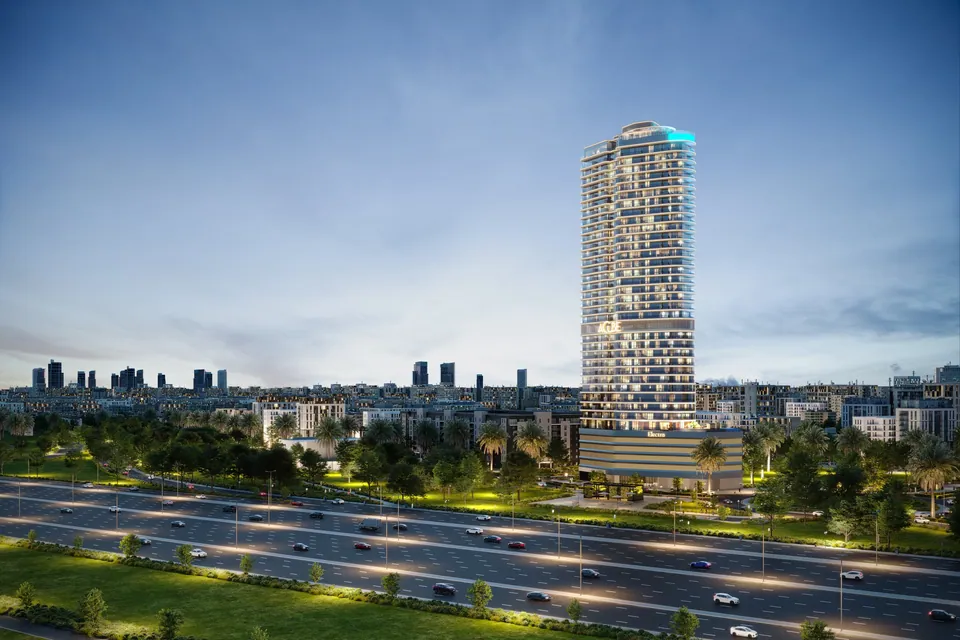
Why? Developer payment plans spread the cost over construction and, increasingly, several years after handover, which is attractive when buyers want to keep capital flexible. Projects like Electra and Vega, for example, offer post-handover instalments of 1% a month.
Rents and yields
Rents have come off their peak. Savills reports rents in major communities falling by an average of around 8–10% in Q2, with steeper drops where new supply is concentrated. Yields remain healthy by global standards, though: Engel & Völkers puts the average gross residential yield at 6.3% as of August 2026, with apartments at 6.7%, townhouses at 5.1% and villas at 4.5%.
Supply: the number to watch
Around 83,000 units are currently scheduled for completion in 2026, although the final figure is likely to be lower as some projects slip. More than 150,000 units were launched in 2025, and a large share of those are due in 2028 and beyond. Communities with heavy handovers in the next 12–24 months are where we expect the most price and rent pressure.
The bigger picture
Forecasters cut their 2026 growth expectations for the UAE after the regional conflict. The World Bank, for example, projects 2.4% growth for 2026 and expects UAE and GCC economies to bounce back in 2027. Dubai's long-term drivers remain in place: population growth, an inflow of high-net-worth residents, the Golden Visa programme, no property or income tax, and a currency pegged to the US dollar.
"Dubai is increasingly behaving as a collection of distinct micro-markets rather than one market moving in a single direction."
Richard Waind, CEO, betterhomes
What this means for investors in H2 2026
- Buyers have more negotiating power. Slower resale activity means more room on price and terms than at any time in the last few years.
- Pick the micro-market, not just the city. Established communities with limited new supply, and well-connected areas like JVC and Dubai Sports City where end-user demand is strong, are holding up better than oversupplied pockets.
- Use payment plans to manage risk. Post-handover plans let you secure a unit now while keeping most of your capital free.
- Think in years, not months. Dubai property works best as a medium- to long-term hold. Most forecasters expect growth to pick up again in 2027.
- Check the developer and escrow. Off-plan payments in Dubai go into regulated escrow accounts. We only recommend projects we've reviewed closely.
If you'd like a shortlist of projects that fit your budget and goals, or a second opinion on a property you're considering, get in touch with our team.
Sources
- Khaleej Times: Dubai property sales hit Dh286b in H1 2026 (DLD data), 14 July 2026
- Dubai Land Department: Q1 2026 transactions reach AED 252 billion, 9 April 2026
- Engel & Völkers: Dubai Housing Market 2026 mid-year review, updated 9 September 2026
- Summary of Savills Dubai Residential Market Q2 2026 report, 13 July 2026
- Zawya: Dubai data shows August property deals down 37%, September 2026
- Khaleej Times: UAE, GCC economies to bounce back after slower growth in 2026 (World Bank)
This article is for general information only and is not financial or investment advice. Figures are from the sources listed and may be revised.