
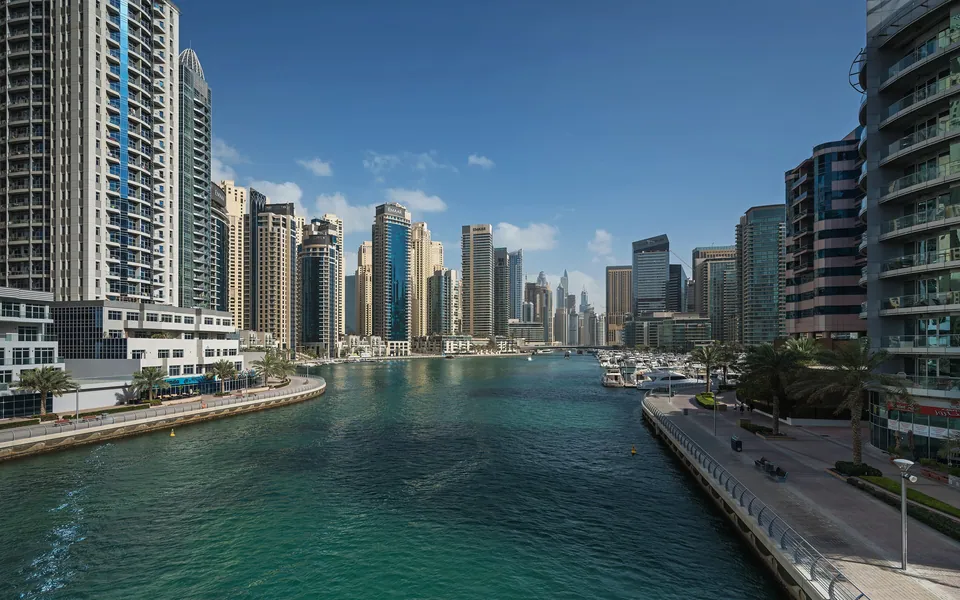
Dubai's property market draws buyers from more than 150 countries, and in 2026 one group keeps appearing near the top of every ranking: British buyers. Indian buyers still lead on most counts, but UK buyers have either matched or overtaken them depending on whose data you read.
This guide pulls together the latest published figures on who is buying in Dubai, what they are buying, where, and why. We also flag where the sources disagree, because the answer to "who is the biggest foreign buyer?" changes depending on the dataset.
Who buys Dubai property in 2026: at a glance
- Buyer mix: buyers came from more than 150 countries in 2025, with Indians at 22%, British at 17% and Chinese at 14% (Anarock, via Khaleej Times, 19 July 2026).
- Early 2026: Indian buyers made up 20.6% of purchasing activity and British buyers 13.3%, ahead of Egyptian (12.6%) and American (9%) buyers (Harbor Real Estate, citing DXBinteract, via Khaleej Times, 9 July 2026).
- UK first: British buyers ranked first in betterhomes' own data for March and April 2026, ahead of India, Australia and Egypt (betterhomes, via Gulf News, 24 June 2026). Transaction volumes were not disclosed.
- Value: residential transactions reached AED 225.7 billion in the first half of 2026, with average prices around AED 1,900 per sq ft, up about 6% on a year earlier (Anarock, via Khaleej Times).
- Why they buy: 38% for own use, 28% for rental income, 21% to qualify for a Golden Visa and 13% for capital preservation (Anarock).
- Cash: around 80% of transactions were cash purchases (Anarock).
Are British or Indian buyers the biggest group?
It depends on the source, and the difference is mostly about method. Anarock's 2025 breakdown has Indians on 22% and the British on 17%. Harbor Real Estate's analysis of early 2026 transactions has Indians on 20.6% and the British on 13.3%. In both, India leads and the UK is second.
betterhomes tells a different story for a narrower window. Its March to April 2026 data put UK buyers first, ahead of India, Australia and Egypt. That ranking reflects only betterhomes' own deals, and the company did not publish transaction counts, so it cannot be read as a market-wide figure.
The fair conclusion is that British buyers are consistently one of the two largest foreign buyer groups, and that shares move from quarter to quarter. No single ranking is definitive, and the figures above are not directly comparable because they cover different periods and datasets.
What British and international buyers actually buy
The Harbor Real Estate data, drawn from DXBinteract, shows that most sales are smaller homes. Between them, one-bedroom apartments (34.9% of sales, 27,590 transactions), studios (23.4%, 18,471) and two-bedroom apartments (20.7%, 16,399) accounted for roughly four in five transactions in the first half of 2026.
betterhomes' March to April data points the same way for its buyers. Apartments made up most deals, concentrated in one- and two-bedroom homes, which the report links to investor-leaning purchases. Dubai Marina led by a clear margin, followed by Jumeirah Village Circle, Jumeirah Lake Towers and Downtown Dubai. Villas were fewer in number but skewed towards five-bedroom homes, and townhouse interest was more spread out, including DAMAC Lagoons, Tilal Al Ghaf and Mohammed Bin Rashid City.
Where is the money going by area?
By value, Harbor Real Estate's first-half 2026 figures show where the largest sums were spent:
| Category | Top areas by value, H1 2026 |
|---|---|
| Apartments | Dubai Islands (AED 8.4 billion), Airport City (AED 7.2 billion), Business Bay (AED 6 billion) |
| Villas and buildings | Al Yalayis 1 (AED 10.6 billion), then Wadi Al Safa 3 and Saih Shuaib 1 (about AED 1.4 billion each) |
| Land | Me'aisem Second (AED 10.1 billion), Al Yalayis 5 (AED 7 billion), Al Ruwayya 1 (AED 6.3 billion) |
These are the names used in Dubai Land Department records, which differ from the marketing names most people know. Source: Harbor Real Estate, citing DXBinteract, via Khaleej Times, 9 July 2026.
What do international buyers say they want?
Survey data gives a window into higher-end demand. Research by Knight Frank and YouGov, covering 387 high-net-worth individuals across the UK, India, Saudi Arabia and East Asia, found that 74% of British respondents considering a UAE purchase named Dubai as their preferred emirate. Their average potential property budget was US$30.3 million. This is a survey of intentions among wealthy respondents, not a record of completed purchases, and it says little about the typical buyer (Gulf News, 16 September 2026, reporting Knight Frank's Destination Dubai 2025 research).
In the same Gulf News report, LEOS Developments cited 2025 data showing 43% of Dubai buyers were end users and 57% investors, and that 72% of deals were priced between AED 500,000 and AED 3 million.
How the 2026 regional tension changed the picture
Buyer behaviour changed after geopolitical tensions in March and April 2026. Anarock reports that residential prices softened 4% to 7% between February and April, and that weekly residential sales rebounded to as much as AED 10 billion after ceasefire efforts progressed. Anarock's Aayush Puri described the correction as "largely sentiment-driven - not structural". Anarock expects prices to rise 4% to 7% in 2026, with renewed regional conflict named as the main risk. A forecast is not a promise, and conditions can change quickly. For fuller context, see our article on Dubai real estate after the March 2026 conflict.
Off-plan properties still made up roughly 70% to 77% of residential transactions over the period (Anarock). Supply is also a factor. Harbor Real Estate says more than 160,000 units are scheduled for delivery in 2026, although actual completions are expected to be much lower (about 39,700 units were completed in 2025). It expects rising supply to slow price growth and rebalance the market rather than trigger a sharp correction. Our Q3 2026 market review covers the latest quarter.
What it means for buyers and investors
- Treat rankings as indicative. Nationality shares vary by dataset and period. A rise in British buying does not tell you whether a particular area or building is a good purchase.
- Smaller homes dominate for a reason, but so does competition. Studios and one- and two-bedroom apartments are the most-traded units, which can mean more choice on the resale and rental market too. Compare supply in your chosen community before buying.
- Know why you are buying. Own use, rental income, a Golden Visa and capital preservation all lead to different choices of property, size and location. The Golden Visa threshold is AED 2 million; see our Golden Visa guide for what has changed.
- Cash buyers set the tone, but mortgages exist. About 80% of deals were cash, yet non-residents and residents can use financing. betterhomes' mortgage arm reported loan-to-value limits of up to 80% for first-time buyers on ready property, 60% for investors and second-home buyers, and a 50% deposit for off-plan, with major banks quoting fixed rates of 3.75% for one year (Gulf News, 24 June 2026). Terms vary by bank and buyer, so check with lenders directly.
- UK taxes still matter. Dubai property is not taxed like UK property, but UK residents can remain liable to UK tax on worldwide income and gains. Take advice from a UK-qualified tax adviser before you buy.
- Do not buy on a headline. Prices can fall as well as rise, rents can fall (as the Q3 data shows), and no outcome is guaranteed.
If you would like an honest view of how a specific area fits your goals, see our Dubai investment guide, browse our properties or speak to our team.
Who is buying Dubai property: quick answers
Which nationality buys the most property in Dubai?
Most datasets put Indian buyers first (22% in Anarock's 2025 breakdown and 20.6% in Harbor Real Estate's early 2026 data), with British buyers second (17% and 13.3%). betterhomes' own March to April 2026 data ranked UK buyers first.
Why do British buyers choose Dubai?
Published reports point to lifestyle, rental income, the Golden Visa and a different tax environment. The mix varies by buyer, and the reasons given in surveys are not a guarantee of any result.
What do most buyers purchase?
Studios and one- and two-bedroom apartments made up roughly 79% of first-half 2026 sales in the Harbor Real Estate data.
Do buyers need to be residents?
No. Buyers from more than 150 countries purchased in 2025, and foreign nationals can buy in designated freehold areas. Check the rules for your chosen area and your own tax position first.
Is the data reliable?
Treat it as indicative. Brokerages publish figures from their own deals, and datasets differ in period and method. The Dubai Land Department is the official record of transactions.
Sources
- Khaleej Times: Indians, Britons lead Dubai property market as deals hit Dh225.7 billion in 2026, 19 July 2026 (Anarock)
- Khaleej Times: Indian, UK, Egyptian investors top Dubai property buyers in 2026, 9 July 2026 (Harbor Real Estate, DXBinteract)
- Gulf News: This nationality is buying the most property in Dubai, 24 June 2026 (betterhomes)
- Gulf News: LEOS Developments data links British demand to purchase purpose, 16 September 2026 (Knight Frank, betterhomes)
This article is for general information only and is not financial or investment advice. Figures are from the sources listed, are not directly comparable between sources, and may change. Figures are as of 21 October 2026.